Rethinking Smart Fridges: How a 20-Year-Old Barcode Could Outsmart AI


Smart home technology is everywhere these days, and smart fridges are no exception. My girlfriend is currently working on a university project in cooperation with LG, which also contained exploring a smart fridge concept. Their team's initial idea was straightforward: install a camera inside the fridge to track items going in and out, storing this data in a database. But this has been done before - Samsung, LG, and others already offer similar solutions.
This got me thinking - could we make fridges smarter in a different, more cost-effective way?
The Traditional Approach: Computer Vision
The standard approach most manufacturers take is using cameras with computer vision. A camera module captures images of items as they're placed in the fridge, and AI algorithms attempt to identify the products. While this technology has improved significantly, it still faces several challenges:
- Accurate identification of similar-looking products (different types of milk cartons, for instance)
- Dealing with items in containers or partially hidden
- Tracking expiration dates
- Higher manufacturing costs
A $30 Alternative
What if we could achieve similar functionality at a fraction of the cost? During my research, I discovered an interesting alternative that leverages existing technology in a new way.
We all know the typical barcodes on our supermarket products - they're ubiquitous in modern retail. In the EU, the EAN-13 format is the standard, holding up to 13 digits of data. But there's another type of barcode that could revolutionize how we track our groceries: PDF417.
The Power of PDF417
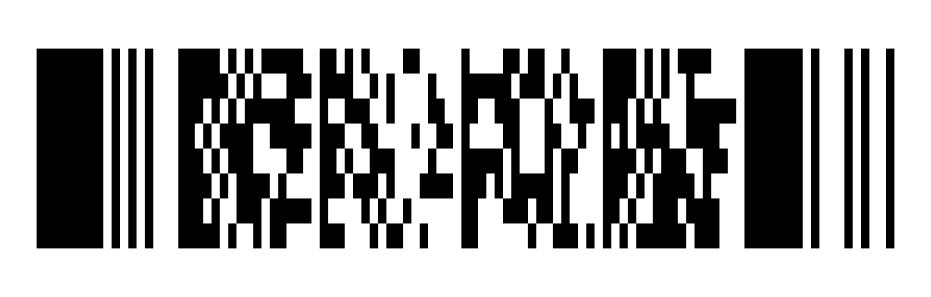
Unlike traditional EAN codes, PDF417 barcodes are incredibly versatile:
The dimension of a PDF417 barcode depends on the amount of data it stores. They are customizable, with adjustable length and width and can encode up to 1850 alphanumeric characters, 2710 numerical characters and 1108 bytes of information. - Source
When researching the cost of a reader supporting PDF417, I found compact barcode scanner modules from Chinese manufacturers for around $30:
 Waveshare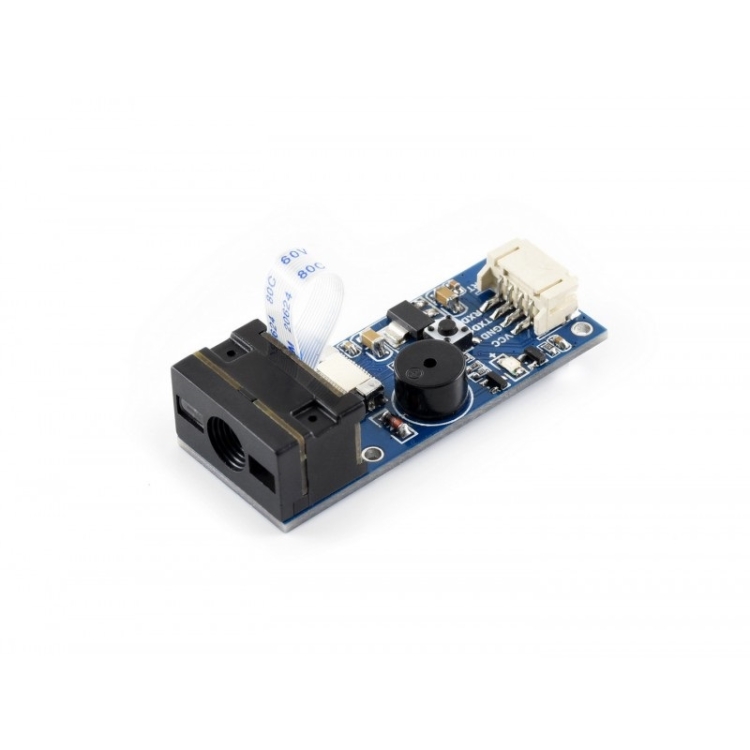
A Real-World Example
Let's take a closer look at something we all have in our fridges - a carton of milk. It's a perfect example to demonstrate the potential of this system. How many times have you stood in the supermarket aisle, trying to remember if you still have milk at home? Or worse, discovered your milk has expired only when you're about to pour it into your morning coffee?
Current barcode technology only tells us the product identifier - those 13 digits in the EAN-13 code that help the cashier ring up your purchase. But PDF417 barcodes could store a wealth of useful information:
- Current EAN-13 code
- Product category
- Best before date
- Size
- Nutritional values
- Storage recommendations
- Production facility
- Carbon footprint
- Allergen information
Imagine your fridge automatically tracking this information. You could check your phone while shopping and know exactly:
- How much milk you have left
- When it expires
- Whether you need the lactose-free version
- If you should buy a larger size based on your consumption patterns
The beauty of PDF417 is that all this data fits in a barcode roughly the same size as current EAN-13 codes, requiring minimal changes to packaging design. And since PDF417 can store the original EAN-13 code as well, it maintains backward compatibility with existing systems.
This isn't just about milk - this approach could work with any perishable item in your fridge. From tracking the ripeness of fruits to managing your cheese collection, the possibilities are extensive. The key is that unlike camera-based solutions that try to guess what products are, this system knows exactly what's in your fridge and when you should use it.
Hybrid Approach: Combining Barcodes and AI
While barcode scanning provides accurate product information, combining it with a camera module could offer the best of both worlds. The AI camera could:
- Detect when items are removed without scanning
- Provide backup identification for products without barcodes
- Track the position of items in the fridge
- Monitor food freshness through visual inspection (especially for fruits, vegetables and cheese)
One con of the use of a scanner would be the needed positioning when putting items into the fridge, this could potentially discourage users from utilising this.
Feasibility and Implementation
The infrastructure for this solution is already more developed than you might think. Many modern checkout scanners, like the MAGELLAN™ 9900i from Datalogic that I've spotted in several local supermarkets, are already capable of reading PDF417 barcodes. This means we wouldn't need a complete overhaul of checkout systems - a significant advantage for retailers.
The main hurdle isn't technical but organisational. Manufacturers would need to update their packaging to include these enhanced barcodes, and the industry would need to agree on a standardised format. This format would need to work not just for milk, but for everything from fresh produce to frozen goods. Questions that would need to be addressed include:
- What information should be mandatory vs. optional?
- How would this work across different countries and regulatory frameworks?
- Who would maintain the standards for this new system?
Despite these challenges, the potential benefits are compelling. For a relatively small investment - both for manufacturers updating their packaging and consumers buying a $20 scanner module - we could transform how we interact with our food storage. This isn't just about convenience; it's about reducing food waste, making shopping more efficient, and helping consumers make better-informed decisions about their groceries.
The technology is ready. The infrastructure is largely in place. Perhaps it's time for the industry to take the next step toward smarter food management - not through expensive cameras and AI systems, but through an elegant evolution of the humble barcode.
Sometimes the smartest solutions aren't about inventing something entirely new, but about making better use of what we already have.
Update (as of July, 2026):
Turns out the industry is already halfway there
While digging into this further while re-publishing my original article from January 2025, I found out that this idea isn't as far-fetched as it might sound. The industry is already moving in a similar direction, just with a different type of code. There is a global initiative called GS1 Sunrise 2027, and it's asking manufacturers to add 2D barcodes (mostly QR codes and DataMatrix, rather than my proposed PDF417) to their packaging, on top of the classic EAN-13. By the end of 2027, retailers are supposed to be able to scan and process these 2D codes at checkout right alongside the old ones.
And the data they can hold isn't so different from what I described above: GTIN, batch numbers, and expiration dates are all part of the plan. So the "what information should this barcode store" question I raised earlier already has a partial answer from the industry itself.
So maybe the more realistic version of my idea isn't "let's invent a new barcode format for fridges," but "let's make sure fridges can read whatever 2D code the industry ends up settling on anyway."